

They left the Upper Room. Jerusalem was flooded with moonlight, and in the overwhelming night, an intense aroma of orange blossoms floated in the air. He took with Him the three witnesses of the Transfiguration—James, Peter, and John—so that they might also be witnesses to a very different kind of transfiguration.
Accompanied by them, He entered the Olive Grove; and in that short distance, the crisis erupted in all its ferocity: it was an overflowing waterfall of dread, sadness, and terror; it was the agony: “He began to be troubled and distressed.”
“My soul is sorrowful even unto death; stay here and keep watch.” It was as if to say: I am dying of sadness.
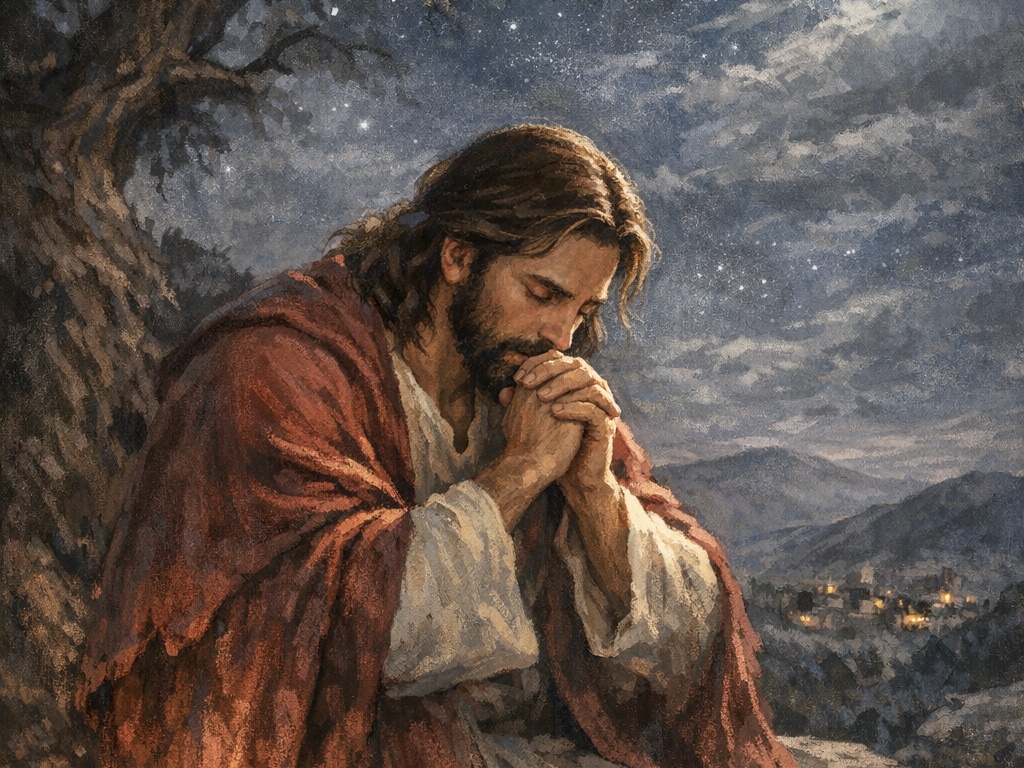
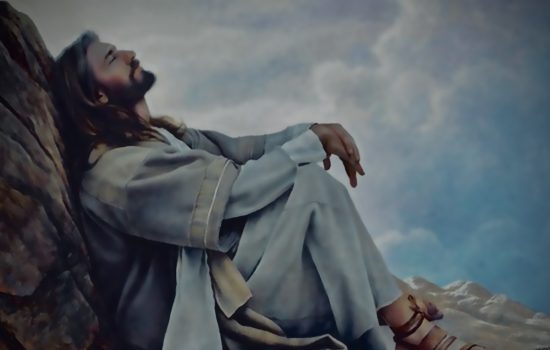
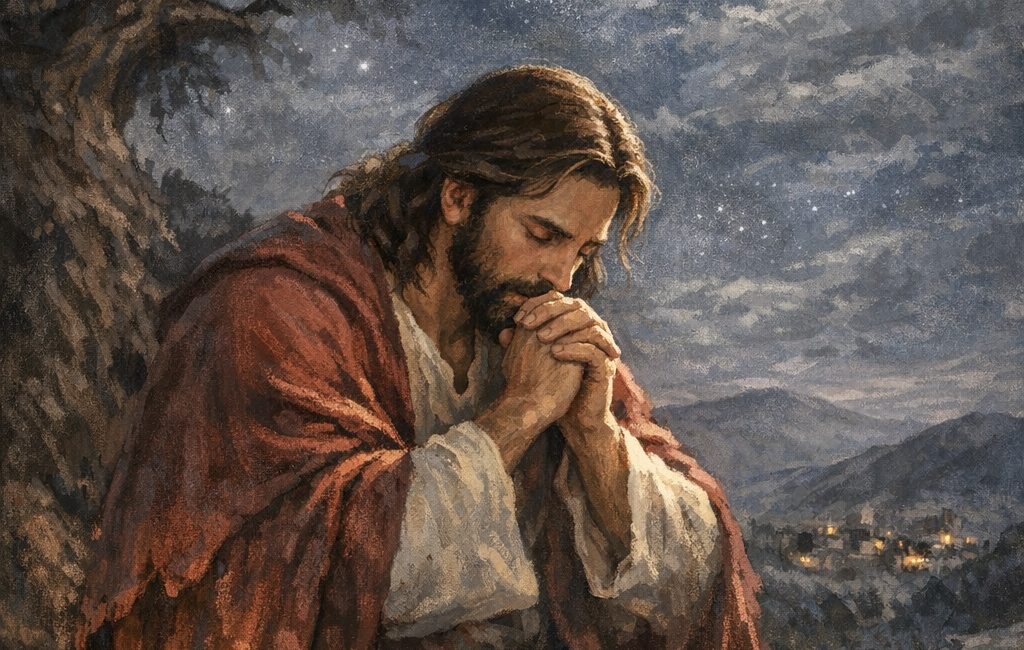
In reality, the Poor One was at that moment besieged by the surge of two waves: the need to be alone and the terror of being alone. Knowing that human comforts are nothing more than flower petals that barely graze the skin, and that the supreme mysteries of man are consumed in the solitude of one’s self, the Poor One withdrew from them about a stone’s throw away. Utterly stricken by the crisis and momentarily defeated, trembling and with knees wavering, He walked a few meters until, exhausted and no longer able to stand, “He fell on His face, praying…” And He entered into agony, in a hand-to-hand combat with death.
For there to be redemption, Jesus had to infuse those historical events with His own will; He had to die voluntarily. To die voluntarily does not mean that Jesus went out to meet death by defying His persecutors, but rather that, by reading the historical events as they were unfolding around Him, Jesus finally discovered in them the Father’s design. The Father could have broken into historical events, interrupting the march of history. If He did not, it was because His will allowed the dynamics of history to follow their fatal course and, as a consequence, His Son to die crucified.
Jesus saw and accepted the Father’s will through the events, and He surrendered not to the fatality of the facts, but to the will of the Father who had permitted them. He died, then, voluntarily; and the culminating moment of that acceptance of the Father’s will took place on the night of Gethsemane.
In Gethsemane, the Poor One distinguished with terrifying clarity between what I want and what You want, establishing between both wills a harsh conflict that manifested in the sweat of blood. While the three confidants—doubtless frightened and utterly dismayed—observed their dejected Master from a short distance, not knowing what to say or do, the Poor One, meanwhile, with “cries and tears” (Heb 5:7) and “fallen on the ground” (Mt 26:39), prayed:
My Father, for You all things are possible: remove the shadow of death from my sight. For You all things are possible: from the heart of winter, You bring forth the green of spring every year. Bury the scythe of death many meters underground. Far from me be the chalice of bitterness! Nevertheless, let it not be what I want, but what You want. And give me wings so that I may fly in pursuit of Your will.
Since He did not feel the Father’s consolation in that most desolate dryness, He tried to seek a vessel of relief in His three confidants. He stood up: He could barely keep His feet. With difficulty and staggering, He advanced to the place where the three disciples were. He would have desired—and this is what He sought—to find the consoling presence of three friends in prayer; but they were drowsy. A great disappointment.
“Simon, are you asleep? Could you not watch for even one hour?” Stay awake and pray; otherwise, you will be overwhelmed by sadness.
He left them. It was written that on that night, the Poor One would find consolation neither in heaven nor on earth. He returned to His solitude, and “being in agony, He prayed more intensely” (Lk 22:44), “repeating the same words” (Mk 14:39).
To put it graphically, the Poor One was transformed that night into the great “Miserable One”—not only in the sense that He took upon Himself all human miseries (Is 53), but in the sense that He experienced the misery of feeling human, until He drained the most bitter dregs of the human chalice. He reached the very limit of what human existence is capable of reaching: the misery and misfortune of being human—solitude, fear, boredom, the absurd, terror, anguish. Who could analyze and measure the depth of Jesus’ affliction when He exclaimed: “I feel a sorrow unto death”?
The Poor One was faithful to man: when the moment of the great tribulation arrived, the idea of reaching into the pocket of divinity to pull out a magic card that would free Him from the bitter drink of death—and that death—never even crossed His mind. In the mystery of the Incarnation, Gethsemane is the final step.
Excerpted from the book The Poor One of Nazareth, Chapter 8, section “The Great Crisis and High Fidelity” by Father Ignacio Larrañaga.