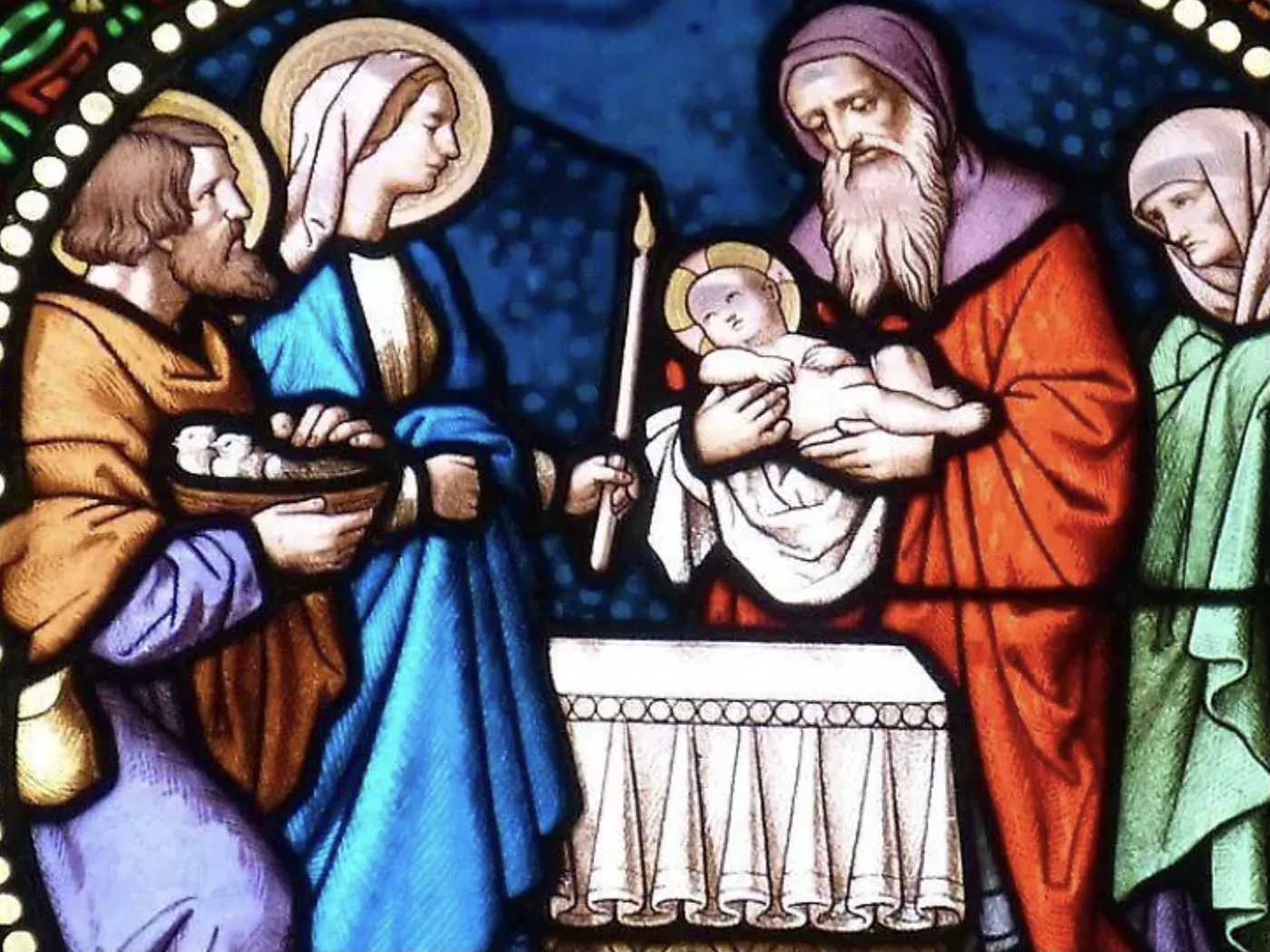


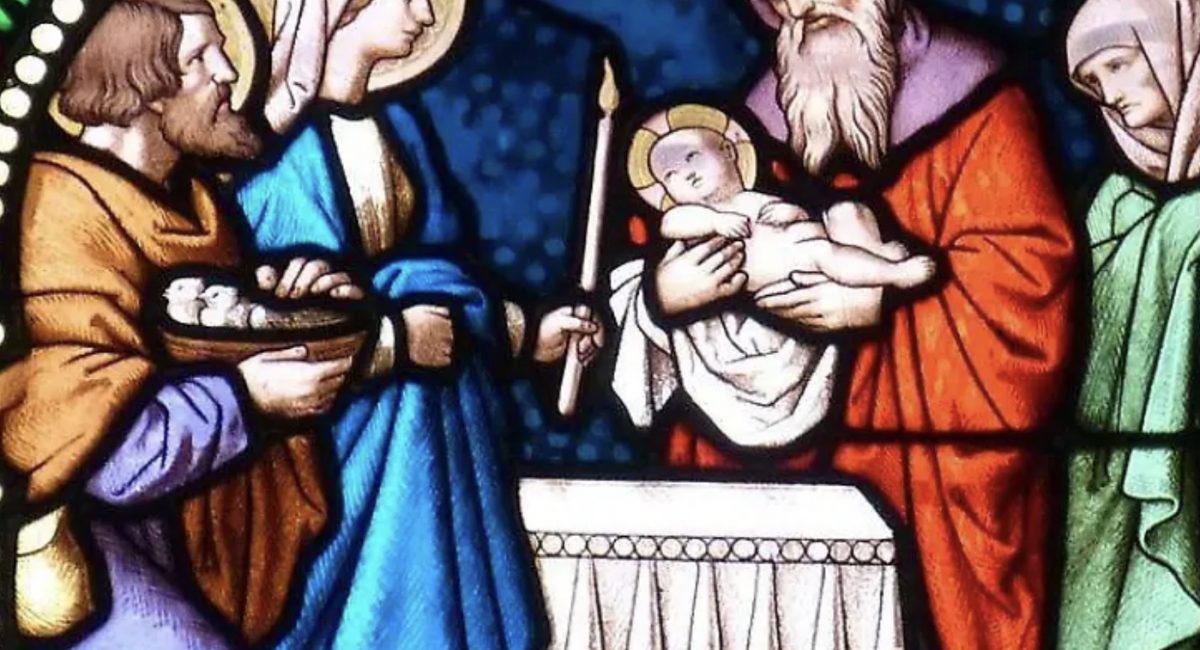
Since the days of Moses, there was an ordinance according to which every firstborn male—“whether human or animal”—was the special property of the Lord. The firstborn animal was offered in sacrifice, and the firstborn man was ransomed by his parents at a price stipulated by the law. According to these same Levitical ordinances, which dated back to the days of the desert, the woman who had given birth remained “unclean” for a determined period and had to present herself at the temple to be declared “pure” by the priest on duty.
Thus, Mary was in the temple of Jerusalem with the child in her arms, next to the Nicanor Gate, in the eastern wing of the Court of the Women. Prompted by the Holy Spirit, a venerable old man appeared there in the midst of the group. His life had been a flame sustained by hope. That life was about to be extinguished.
The venerable old man took the child from his mother’s arms and, addressing the pilgrims and devotees, spoke strange words to them: “Worshippers of Yahweh! This one you see here, in my arms, this is the Expected One of Israel. He is the light that will shine upon all nations. He will be a sign of contradiction. All will take a side regarding Him, some in favor and others against. There will be resurrection and death, ruin and restoration. And now, my eyes can close; I can die in peace, because my hopes have been fulfilled.”
What was Mary’s reaction to these words? The Mother remained silent, “amazed” by everything that was being said (Lk 2:33). Everything seemed so strange to her. Was she amazed? It is a sign that she was unaware of something and that she did not understand everything regarding the mystery of Jesus. Admiration [wonder] is a psychological reaction of surprise toward something unknown and unexpected.
The greatness of Mary does not lie in imagining that she was never assailed by confusion. It lies in the fact that when she does not understand something, she does not react with anguish, impatience, irritation, anxiety, or fear.
Instead, she adopts the typical attitude of the Poor of God: full of peace, patience, and sweetness, she takes the words, withdraws into herself, and remains internalized, thinking: What do these words mean? What will be the will of God in all of this? The Mother is like those flowers that close in on themselves when the sunlight disappears; thus, she retreats into her interior and, full of peace, identifies herself with the disconcerting will of God, accepting the mystery of life.
Taken from the book “The Silence of Mary,” Chapter II, sections: “Among the Shadows” and “She Kept and Pondered These Things” by Father Ignacio Larrañaga.